VOICE Event Highlights the Power of Artist-Led Innovation for a Sustainable Europe
On 10 June 2026, policymakers, artists, researchers, and community representatives gathered in Brussels for VOICE: The Power of Artist-Led Interventions for a Sustainable Europe, an official Satellite Event of the New European Bauhaus Festival 2026.
As the VOICE project enters its final months, the event provided an opportunity to share lessons emerging from twenty Art–Technology–Society Interaction (ATSI) initiatives and explore how artist-led innovation can contribute to more sustainable, inclusive, and community-centred futures.
The discussions reinforced a central message: meaningful innovation happens when artists, communities, researchers, and policymakers work together. Through the VOICE Platform, the Manifesto, and ongoing collaboration across its network, the project will continue to develop and refine its outputs in the months ahead, ensuring that the knowledge generated through artist-led innovation remains accessible and actionable beyond the project's lifetime.
Learning from twenty artist-led initiatives
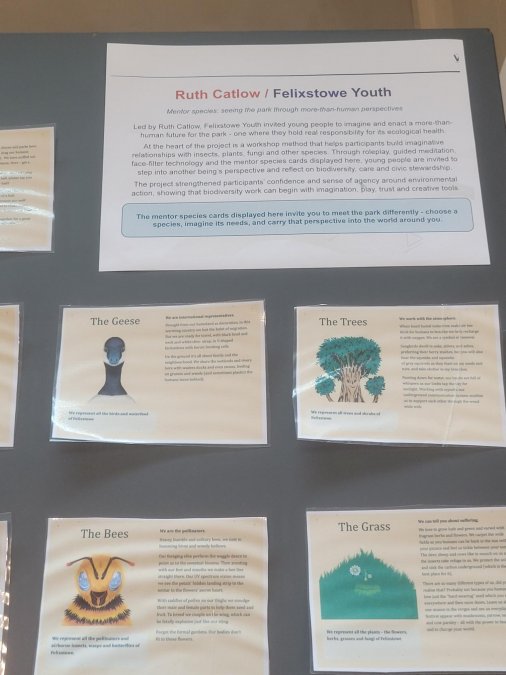
At the heart of the event were the experiences and insights emerging from the twenty Art–Technology–Society Interaction (ATSI) initiatives supported by VOICE. Zeynep Birsel (WAAG) presented key lessons from the ATSI projects, highlighting how artists worked alongside communities to address environmental challenges, including biodiversity, water systems, soil health, and air quality. These initiatives demonstrated that ecological challenges are inseparable from social realities and that meaningful solutions require collaboration across disciplines, sectors, and communities.
From artistic practice to policy dialogue
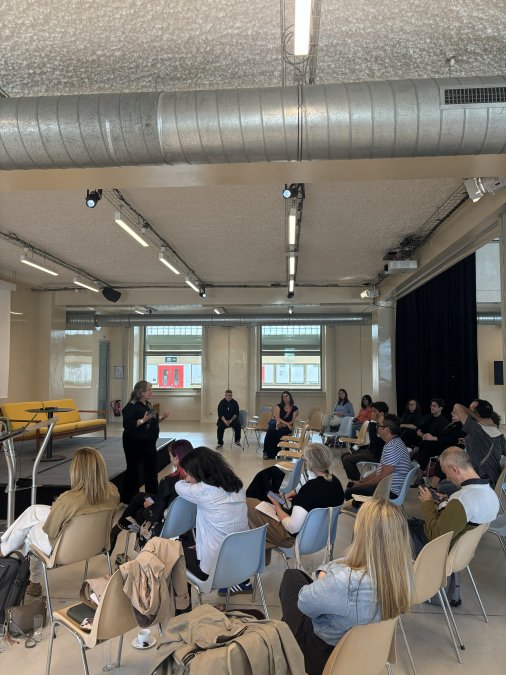
These themes were explored further during the Artist-Led Policy Lab, facilitated by Dr Anita McKeown. The session brought together artists, community representatives, researchers, policymakers, and innovation actors to explore how artistic practice can support more responsive and inclusive approaches to policymaking.
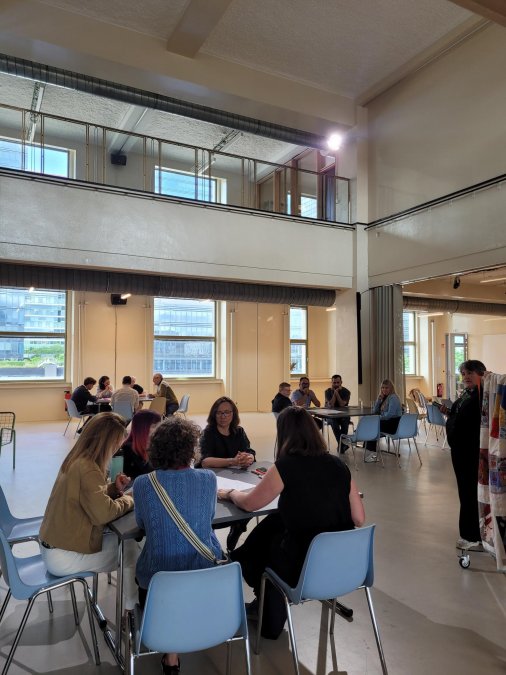
The lab began with short provocations from artists Jakob Kukula, Nadja van der Weide, and community representative, Courtney Hessey, who shared insights from their work at the intersection of art, community engagement, and social change. Participants then joined small-group discussions with each of the contributors, creating a space for deeper exchange around local knowledge, lived experience, and creative approaches to addressing environmental and societal challenges.
Participants reflected on the importance of creating spaces where communities can share experiences, experiment with ideas, and collectively imagine alternative futures. Discussions highlighted the need for policy approaches that emerge from lived experience and local knowledge rather than relying on top-down processes. The session also emphasised the importance of long-term support structures that enable collaboration between artists, communities, and policymakers.
Turning stories into evidence
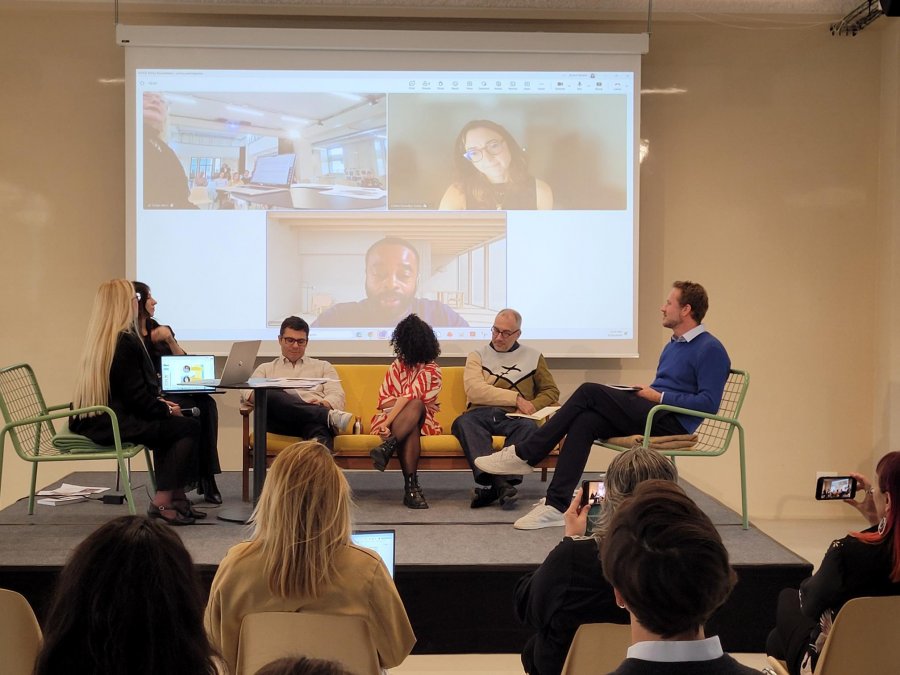
These themes continued throughout the afternoon Policy Roundtable, chaired by Prof Lizbeth Goodman. A key question emerged: how can stories, experiences, and community knowledge become recognised forms of evidence within policy processes?
Participants explored the role of artists as facilitators of dialogue and change, helping communities make sense of complex environmental and societal challenges. The discussion also highlighted the need for stronger connections between creative practitioners and policymakers, particularly at a time of rapid technological and social transformation.
During the Policy Roundtable, Prof Lizbeth Goodman drew attention to a recurring challenge across research and innovation projects: valuable knowledge, methodologies, and community experiences are often lost once projects come to an end. Preserving these insights and making them available to future practitioners, communities, researchers, and policymakers was identified as a key priority that directly informed the development of the VOICE Knowledge Platform.
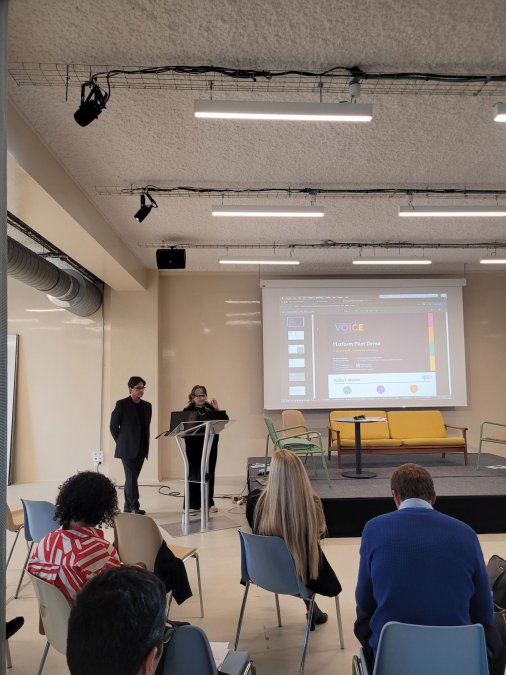
Showcasing the Pilot version of the VOICE Knowledge Platform
To address this challenge, the VOICE consortium presented the pilot version of the VOICE Platform. Developed through a needs analysis involving all twenty ATSI initiatives, the platform was designed to preserve, organise, and share knowledge generated through artist-led eco-social practice. Rather than imposing a top-down framework, the platform was reverse-engineered from artists’ experiences and responds to 142 knowledge gaps identified during the project. Built as an open-access resource, it offers tools, guidance, and learning pathways for artists, communities, organisations, funders, and researchers.
The VOICE Mandate and Manifesto
Prof. Lizbeth Goodman talked about the VOICE Mandate and Manifesto, which brings together key recommendations emerging from the VOICE project, but also projects such as RADICAL and S+T+ARTS, which were the predecessors of the VOICE project.
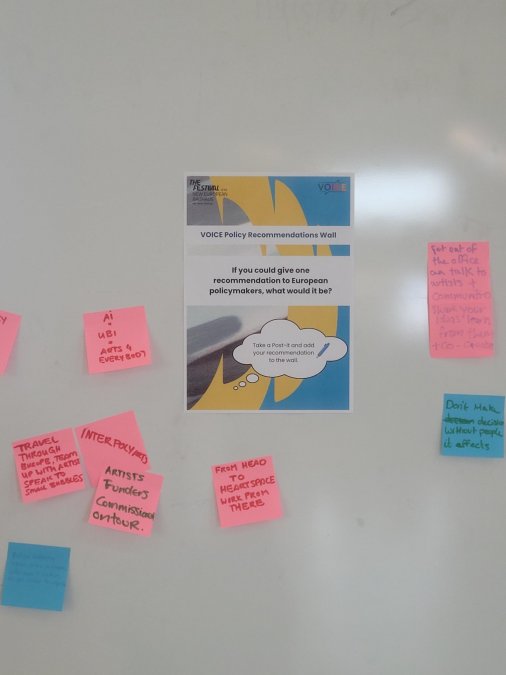
Participants called for stronger support for artist-led innovation, including longer project durations, dedicated resources for community engagement, improved peer-learning opportunities, and greater recognition of artist-led methodologies within policy and funding frameworks.
The recommendations also highlighted the importance of community-led ethics non-extractive engagement practice as a standard for marginalised communities, and the role of artists in supporting Europe’s Digital and Green twin transition.
Reflecting on the discussions, Marta Coto, VOICE Project Coordinator, noted:
“One of the strongest messages emerging from VOICE is that artists do much more than communicate complex issues; they help communities understand, experience, and respond to them. If we want more inclusive and sustainable futures, we need innovation ecosystems that recognise and support this role.”
As the VOICE project comes to a close, its message remains clear: meaningful innovation happens when artists, communities, researchers, and policymakers work together. Through the VOICE Manifesto, the Platform, and the networks built over the past three years, the project leaves behind not only a set of recommendations but also practical tools and relationships that can continue supporting artist-led innovation across Europe.